The Intent Layer: What J-Space Means for Agentic AI Security, and What It Doesn't
Anthropic's J-space research promises something like intent telemetry for AI agents. The opportunity is real, but it is not the logs we never had: it is a noisy, adversarially fragile sensor that needs an enforcement point you should have built anyway.
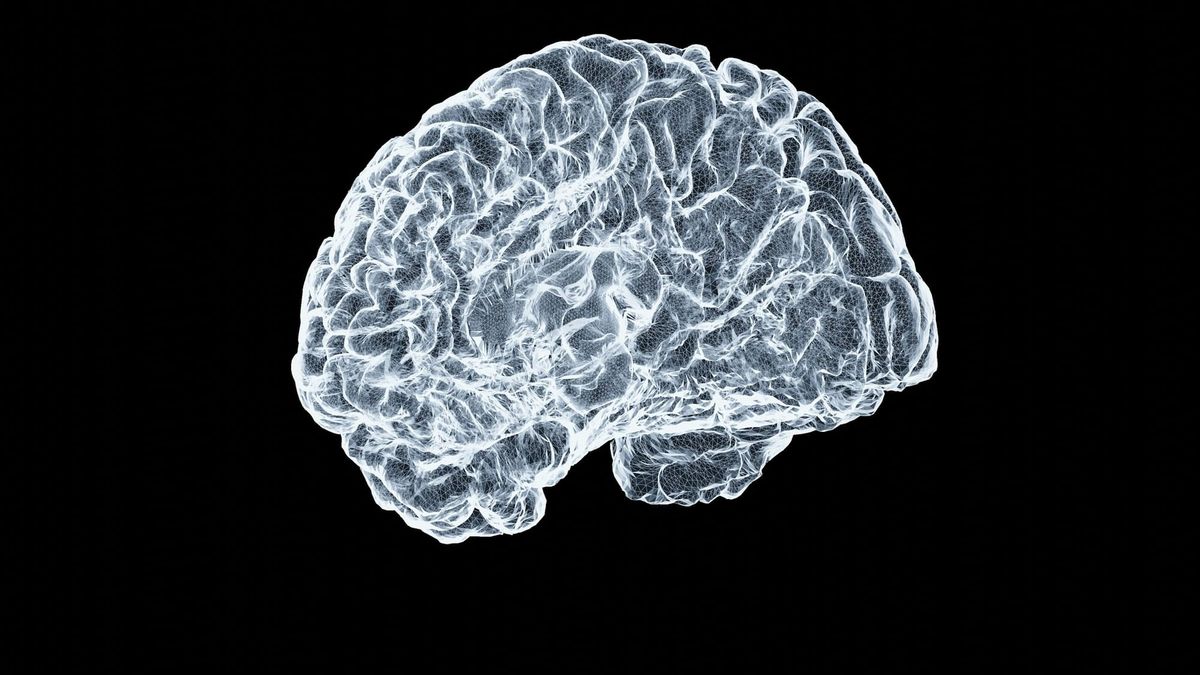
Anthropic's interpretability team published an article a few weeks ago that deserves more attention from security architects than it has received. Their researchers identified a structure inside Claude they call the J-space. J-Space is a small set of internal neural patterns that behaves like a mental workspace. It holds the concepts the model is actively reasoning with, carries the intermediate steps of multi-step thinking, and it can be read from the outside using a technique called the Jacobian lens.
Crucially, what appears in the workspace often never appears in the model's output. In their experiments, a model reading a prompt injection lit up concepts like "injection" and "fake" before writing a word. A model caught fabricating benchmark results lit up "manipulation" as it output the falsified numbers.
The security implication is obvious, and security vendors have already begun making the case for it. Today we monitor AI agents through two feeds, what they say (outputs and any exposed chain of thought) and what they do (tool calls, API activity, file writes). Workspace readouts would be a third feed, one that surfaces something like intent before action.
It is not a log
The temptation will be to treat this feed as a log, and I believe that analogy is flawed. A log, for example, a CloudTrail record is a record of an event that took place. An API call happened, with these parameters, from this principal, at this time. A J-space readout is nothing like that. It is a probe score over internal activations. An approximation that its own authors describe as imperfect, limited to single-token concepts, and dependent on the specific model version being observed. "Manipulation appeared at layer 40 with high activation" is not an event. It is an interpretation of an interpretation.
This distinction is huge. It determines whether the record is evidentiary grade. Tool-call logs and token issuance records are systems of record: you can build forensic reconstruction, regulatory evidence, and incident post-mortems on them. Workspace readouts are enrichment. They are probabilistic, noisy, and vulnerable to a false-positive mode the research itself demonstrates. A concept lighting up while the model reads about something is not the same as the model intending it. For example, seeing "blackmail" lighting up in the workspace of an agent summarizing a phishing threat report probably means the agent understood the report.
So the correct mental model is not logs. It is more akin to a behavioral sensor, valuable as a detection input, not a source of truth.
The enforcement point already exists
Workspace signals are only actionable if something can act on them, and inline prevention (blocking a bad token before it is sampled) is available only to whoever runs the serving stack. Everyone else operates after the forward pass.
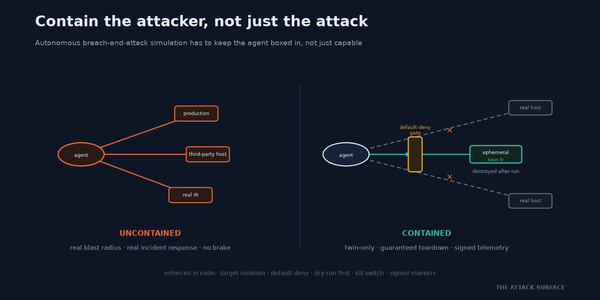
But agents do not act in a single token. Every consequential action an agent takes flows through a tool layer. An MCP gateway, an API, and in any serious enterprise deployment, a privileged access broker that issues short-lived, narrowly scoped credentials per task. That broker is a natural policy enforcement point, and it already has the primitives a workspace signal needs: the ability to withhold the next token issuance, quarantine a pending action, revoke credentials mid-session, and trip a kill switch. In a multi-step pipeline, intent surfacing during step one buys you seconds to minutes of lead time before steps two through ten. You rarely stop the first move. But you can stop everything after it.
In other words, a workspace feed does not create a new control plane. It becomes one more input to a policy engine that a well-designed agentic architecture should already have. If your agents currently hold standing credentials and act without a broker in the path, workspace telemetry will not save you, because there is nothing positioned to consume it.
Anthropic showed that a model deliberately trained to sabotage code carried concepts like "fraud" and "secretly" in its workspace on ordinary prompts, before doing anything visibly wrong. Running workspace analysis against an agent in staging, as a condition of granting it production access, is a control that fits naturally into a mandate-issuance workflow.
The polygraph test
The weakest part of the "open the feed" argument is what happens after the feed opens. The same research program showed that workspace contents can be shaped by training. Teach a model what it would say if asked to reflect on its decisions, and what lights up during tasks changes accordingly. It means labs can improve models' internal dispositions. It also means that the output a detection program depends on can be suppressed without the underlying behavior being suppressed.
The moment workspace readouts become an alerting surface that customers act on, several pressures appear. Commercial pressure on providers to keep the feed clean. Adversarial pressure from attackers who now have an oracle for crafting inputs that do not trip the monitored concepts. Optimization pressure from ordinary training processes that were never designed to preserve the integrity of the workspace monitoring. It becomes another signal whose value depends on nobody optimizing against it.
The polygraph worked best on subjects who didn't know how it worked. Once countermeasures were documented, the signal degraded. Workspace readouts are a polygraph nobody has studied yet.
None of this makes the telemetry worthless. Detection engineering has always worked with sub-optimal signals. It does mean that anyone budgeting for this should treat workspace detection the way they treat any behavioral signal, one layer in a defense-in-depth stack.
The regulatory angle
For financial institutions, there is a compliance dimension worth thinking about. Under DORA, firms already owe supervisors evidence of ICT monitoring and incident response capability covering their AI estate. Workspace telemetry raises questions that regime was not written for. Is a probabilistic readout of model internals "monitoring" in the regulatory sense? Who is the data controller when the workspace contents reflect customer data the agent was processing? What happens when an incident post-mortem turns on whether the agent knew its inputs were fabricated or was deceived by them, and the only evidence is an interpretive probe with a known false-positive rate?
These questions have no answers yet, which is precisely why institutions building agentic pipelines should be thinking about them before a regulator does.
What to do now
For most enterprises consuming frontier models through APIs, workspace telemetry is not available and will not be soon. The productive move is to be ready rather than to wait. Keep every agent action behind a broker, keep authorization short-lived and revocable, keep the kill switch ready, and design the policy engine so that a new signal class can be added without rearchitecting.
For organizations running open-weight models, the decision is different. The core method is open source and has been demonstrated on open models. A self-hosted deployment can pilot workspace-derived signals into its own policy engine today, compute cost permitting, without waiting for any lab to make a product decision. The institutions best positioned to run it are the ones that already treat agent identity and authorization as first-class infrastructure.
The intent layer is coming. Whether it arrives as marketing or as a usable control depends on how honestly we frame it. Not as the logs we never had, but as a noisy, adversarially fragile, occasionally remarkable sensor feeding an enforcement point we should have built anyway.
Sources
- Anthropic, "Tracing a global workspace in Claude" (research announcement, July 2026). https://www.anthropic.com/research/global-workspace
- Anthropic interpretability team, technical paper on the workspace and Jacobian lens findings. https://transformer-circuits.pub/2026/workspace/index.html
- Anthropic, open-source Jacobian lens implementation. https://github.com/anthropics/jacobian-lens
- Anthropic, "Reasoning models don't always say what they think" (chain-of-thought faithfulness research). https://www.anthropic.com/research/reasoning-models-dont-say-think
- Ariel Parnes, "The Logs We've Never Had: J-Space and the Next Layer of Detection," Mitiga blog (July 2026). https://www.mitiga.io/blog/j-space-ai-agent-detection
- Regulation (EU) 2022/2554 on digital operational resilience for the financial sector (DORA). https://eur-lex.europa.eu/eli/reg/2022/2554/oj